The skin around your eyes is different from the skin on most of your face. It is thinner, constantly moving, and often one of the first areas where fine lines, rough texture, and crepey skin become noticeable.
For patients who want to improve the quality of the skin itself rather than simply add volume, Erbium YAG laser resurfacing may be an option.
Quick Answer: Can Erbium YAG Improve Crepey Under-Eye Skin?
Erbium YAG laser resurfacing can improve fine lines, rough texture, and crepey skin around the eyes by precisely resurfacing the skin and stimulating a healing and collagen-remodeling response.
It does not treat every cause of under-eye aging. Hollowing, significant fat pads, muscle-related wrinkles, pigmentation, and loose skin may require different or complementary approaches. That distinction is critical.
Why Does Under-Eye Skin Become Crepey?
Several age-related changes can happen at the same time:
- Reduced collagen and elastin
- Repetitive facial movement
- Cumulative sun exposure
- Skin thinning
- Loss of facial volume
- Changes in underlying fat
- Changes in facial support
- Dryness and environmental exposure
Arizona sun exposure can further contribute to visible photoaging. This combination can create skin that looks wrinkled, crepey, thin, textured, uneven, or tired. No single procedure addresses every one of these changes.
What Is Erbium YAG?
Erbium YAG is an ablative laser with a wavelength of approximately 2,940 nm. Its energy is strongly absorbed by water in the skin, allowing a trained provider to remove extremely precise layers of tissue while controlling treatment depth.
Compared with CO2 resurfacing, Erbium generally produces less residual thermal injury in surrounding tissue. That difference can influence treatment intensity, recovery, and which laser is appropriate for a particular patient or area.
Why Use Erbium Around the Eyes?
The eye area requires precision. Erbium YAG can be adjusted based on skin thickness, degree of photoaging, fine-line depth, treatment location, desired resurfacing depth, and recovery tolerance.
For many patients, the goal is not to look like a different person. It is to help the skin around the eyes look smoother, healthier, and more consistent with the rest of the face.
Because treatment is close to the eyes, appropriate eye protection and a provider trained in periocular laser treatment are essential.
What Can Under-Eye Erbium Treat?
Erbium resurfacing may be considered for:
- Fine lines under and around the eyes
- Crepey surface texture
- Roughness
- Mild visible sun damage
- Uneven skin quality
- Fine lines that are more visible with makeup
Results depend on treatment depth and the underlying cause of the concern. Surface resurfacing cannot reposition fat or rebuild structural support.
What Erbium Cannot Fix
Under-eye concerns are often grouped together even though they come from different anatomy. Erbium is not designed to remove a prominent fat pad, fill a deep tear trough, stop dynamic crow’s-feet movement, or replace surgery when significant skin laxity is present.
A careful consultation should distinguish among:
- Texture and fine lines
- Hollowing or volume loss
- Under-eye bags
- Pigmentation
- Visible vessels
- Dynamic wrinkles
- Significant skin laxity
This prevents a patient from choosing a popular procedure that does not match the actual concern.
Erbium vs. CO2 Around the Eyes
Both are ablative resurfacing lasers, but they interact with tissue differently. CO2 generally leaves more residual heat and may be selected when a provider wants deeper thermal remodeling. Erbium is absorbed more strongly by water and can remove tissue with greater ablation precision and less residual heat.
Neither laser is automatically better. The choice depends on the desired depth, skin characteristics, treatment area, downtime tolerance, and provider judgment.
Erbium vs. Under-Eye Filler
Erbium improves skin quality. Filler, when appropriate, addresses volume and contour. These treatments do not solve the same problem.
Laser may be more relevant when the main complaint is crepey texture or fine lines. Filler may be considered when appropriate volume loss creates a visible hollow or shadow, although the under-eye area requires conservative treatment and is not suitable for every patient.
Some people have both concerns and may need a staged plan. Others should avoid filler because swelling, anatomy, or existing product makes it a poor match.
Erbium vs. PRF
Platelet-rich fibrin treatments use a patient’s own blood-derived components and are often discussed for under-eye skin quality or support. PRF does not resurface the epidermis the way an ablative laser does.
The better option depends on whether the dominant concern is surface texture, hollowing, skin quality, pigment, or laxity. Touch & Glow may recommend one treatment, a sequence, or neither after assessment.
What Happens During Treatment?
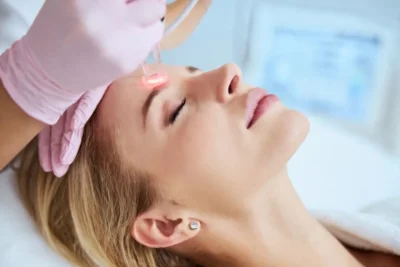
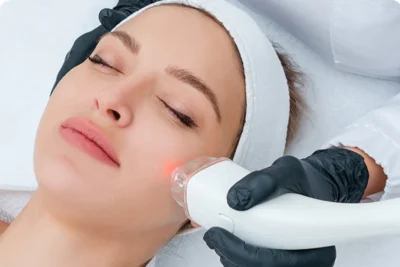
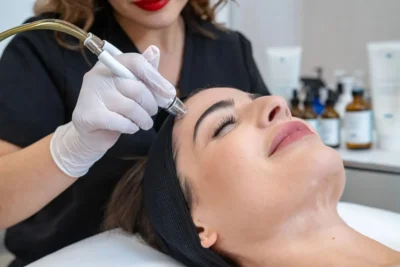
The exact protocol varies. In general, the skin is cleansed, comfort measures are used, protective eye shields are placed when indicated, and the provider delivers controlled laser passes to the selected area.
Treatment settings should be tailored to the thin periocular skin rather than copied from full-face settings. Patients receive detailed aftercare instructions for cleansing, moisture, sun avoidance, and products to pause or resume.
How Long Does Under-Eye Erbium Take to Heal?
Recovery depends on treatment depth. Visible effects can include redness, swelling, sensitivity, dryness, flaking, or temporary darkening as the skin renews.
A lighter treatment may involve a shorter visible recovery. A deeper treatment can require more time. Patients should plan around work, events, outdoor activity, and the possibility that residual pinkness lasts beyond the initial peeling phase.
Your provider should give an individualized estimate rather than a universal promise.
When Will Results Appear?
Smoother surface texture may become noticeable after visible healing. Collagen remodeling continues more gradually, so the final result should not be judged during the first several days.
Results vary with age, skin quality, treatment depth, sun exposure, aftercare, and the type of concern being treated. Maintenance and daily sun protection help protect the improvement.
Is Erbium Safe for Darker Skin Tones?
Any resurfacing treatment can cause pigment changes, and risk assessment becomes especially important in patients with more melanin or a history of post-inflammatory hyperpigmentation.
Safety depends on candidacy, pre-treatment preparation when appropriate, conservative settings, post-treatment care, and provider experience. A consultation is necessary; the name of the laser alone does not determine safety.
Can Erbium Tighten Eyelid Skin?
Erbium may create a visible tightening effect by resurfacing tissue and stimulating remodeling, but the degree of change varies. It does not duplicate surgical removal or repositioning of significantly lax eyelid skin.
A provider should explain whether laser, injectable treatment, skincare, or a surgical consultation best matches the anatomy and goals.
Who Is a Good Candidate?
Potential candidates are adults bothered by fine lines, crepey texture, roughness, or sun-related changes around the eyes who understand the recovery process and can follow sun-protection instructions.
Treatment may need to be delayed or avoided with active infection, recent tanning, certain medications, impaired healing, uncontrolled skin conditions, pregnancy-related considerations, or other medical factors. Eligibility requires an individual clinical review.
Frequently Asked Questions
What laser is best for crepey under-eye skin?
There is no universal best laser. Erbium may be attractive for precise resurfacing, while CO2 may be chosen when more thermal remodeling is desired. Anatomy, skin type, and treatment goals determine the recommendation.
Is Erbium laser safe under the eyes?
It can be used around the eyes by an appropriately trained provider with proper eye protection and treatment settings. The area requires careful patient selection.
Does Erbium help under-eye bags?
Erbium may improve the skin surface but does not remove or reposition a prominent fat pad. True bags may need a different treatment.
Can laser replace under-eye filler?
Not when volume loss is the main concern. Laser improves skin quality; filler changes contour and volume. Some patients should not receive filler at all.
How many Erbium treatments will I need?
The number depends on treatment depth, skin condition, goals, and response. Some patients choose one more intensive treatment, while others use a series of lighter treatments.
How long do results last?
Improvements can be long-lasting, but natural aging and sun exposure continue. Daily sun protection and an appropriate maintenance plan matter.
Schedule an Under-Eye Laser Consultation in Glendale
A good under-eye treatment plan begins by identifying whether the concern is texture, pigment, movement, volume, fat, or laxity. Schedule a consultation with Touch & Glow Med Spa in Glendale, Arizona to learn whether Erbium YAG, CO2, PRF, another treatment, or no procedure is the right fit.
Results vary. Treatment recommendations require an individual consultation.

Wendy Beltran, FNP-BC, is the Medical Director and lead injector at Touch and Glow Med Spa in Glendale, Arizona. A Family Nurse Practitioner since 2008 with a clinical background in Gastroenterology, Family Practice, and Urgent Care, Wendy combines deep medical expertise with an artistic eye to deliver natural-looking results. She has been an aesthetic injector since 2018 and is passionate about patient education and safety.