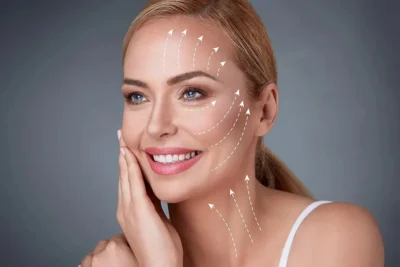
Jowls are not caused by one change alone. Skin laxity, shifting facial fat, loss of structural support, bone changes, muscle activity, and the position of the neck can all affect the lower face.
PDO thread lifts are often marketed as a non-surgical facelift, but the most natural results come from understanding what the treatment can realistically accomplish.
Quick Answer: Do PDO Threads Work for Jowls?
PDO threads can create a modest, immediate lift in appropriately selected patients with mild to moderate lower-face laxity. The threads also trigger a healing response that may support collagen formation as they dissolve.
They do not remove excess skin, recreate the structural correction of a surgical facelift, or correct every cause of a heavy jawline. Results depend on anatomy, thread type, placement, tissue quality, and expectations.
What Causes Jowls?
Lower-face sagging can reflect several overlapping changes:
- Reduced collagen and skin elasticity
- Descent of facial fat pads
- Loss of cheek or chin support
- Bone remodeling with age
- Laxity in facial retaining structures
- Platysmal or neck changes
- Submental fat
- Skin quality and sun damage
A patient with early tissue laxity may be a reasonable thread candidate. Someone with heavy tissue, advanced laxity, prominent neck bands, or substantial excess skin may need another plan.
How a PDO Thread Lift Works
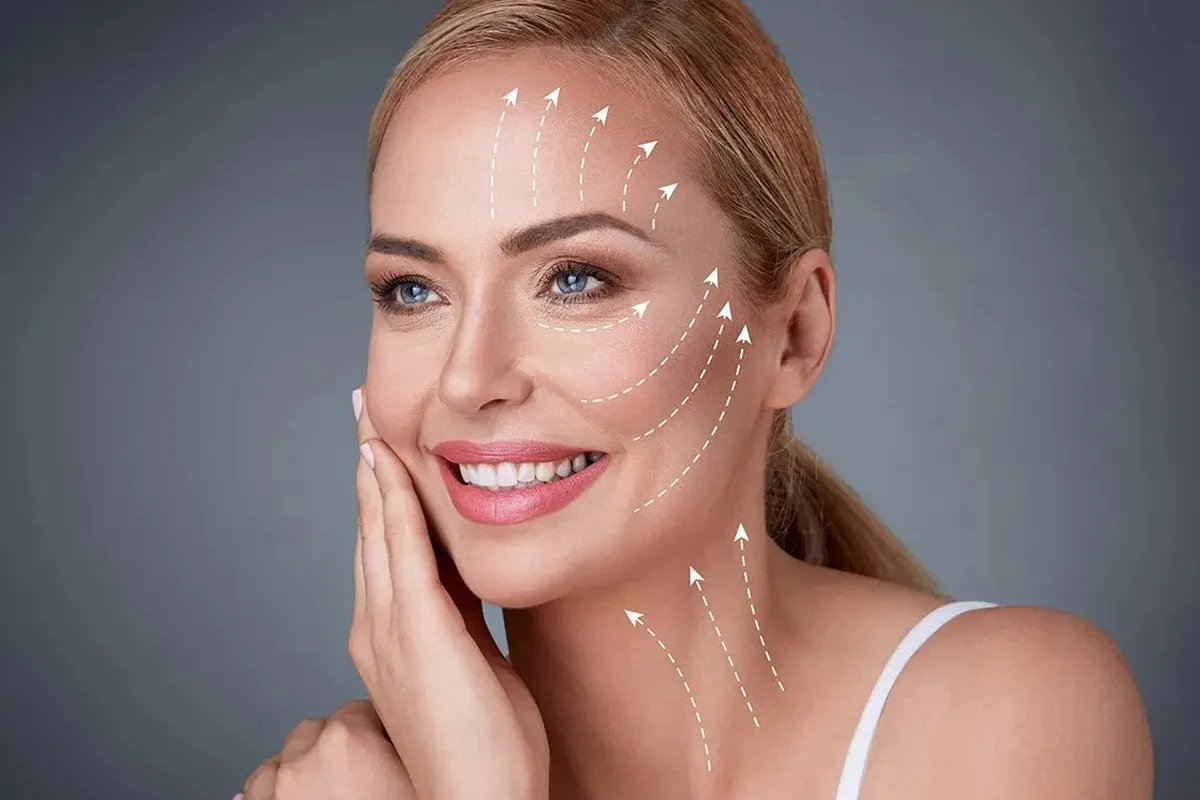
PDO stands for polydioxanone, a biodegradable material used in medical settings. During a thread lift, a trained provider places absorbable threads beneath the skin through small entry points.
Lifting threads may have barbs, cones, or other structures that engage tissue and allow repositioning. Smooth threads are generally used differently and should not be confused with lifting threads.
PDO treatment has two potential effects:
- Immediate mechanical repositioning of selected tissue
- A gradual healing and collagen response around the threads
The material dissolves over time. The visible result and its duration vary from person to person.
What Can PDO Threads Improve?
In a well-selected patient, threads may help:
- Soften early jowling
- Improve lower-face definition
- Create a subtle lift along the jawline
- Reposition mild cheek or lower-face descent
- Improve selected areas of neck laxity
- Support a more refreshed facial contour
The goal should be a controlled, believable change rather than an exaggerated pull.
What PDO Threads Cannot Do
PDO threads are not designed to:
- Remove a large amount of loose skin
- Remove significant submental fat
- Correct severe platysmal banding
- Replace lost bone or deep structural support
- Produce the same longevity as a surgical facelift
- Guarantee a sharply defined jawline in every anatomy
If the main problem is volume loss, fat, muscle activity, poor skin texture, or advanced laxity, adding threads alone may disappoint.
How Many Threads Are Needed for Jowls?
There is no universal number. Thread count depends on thread design, treatment area, tissue weight, degree of lift desired, symmetry, and provider technique.
A responsible plan is not based on using the largest number of threads. It is based on placing the appropriate type and number where they can safely create useful support.
What Does a Thread Lift Feel Like?
Comfort measures are used, and patients may feel pressure, tugging, or movement during placement. Afterward, common temporary effects can include:
- Tenderness
- Swelling
- Bruising
- Tightness
- Mild asymmetry while swelling settles
- Dimpling or puckering
- Awareness of the threads with facial movement
Patients receive instructions about sleeping position, exercise, facial massage, dental work, and exaggerated mouth movement during early healing.
How Long Does a PDO Thread Lift Last?
The threads themselves dissolve, but the visible effect may persist beyond the presence of the material because of tissue repositioning and collagen response.
Longevity varies with age, tissue weight, skin quality, metabolism, thread type, technique, and lifestyle. Threads are a temporary treatment and maintenance may be needed. Avoid promises of an exact duration before an individual assessment.
PDO Threads vs. Filler for Jowls
Filler adds volume and structure; threads reposition tissue. They solve different problems.
Strategic chin, jawline, or cheek filler may improve support and proportions in selected patients. Placing too much filler directly around a heavy lower face can make it look fuller rather than lifted.
Some patients benefit from a conservative combination. Others should choose one treatment or avoid both. Facial anatomy should determine the plan.
PDO Threads vs. Radiesse
Radiesse is a biostimulatory filler that can add structure and stimulate collagen. It may be used for contour or support in appropriate areas, while threads provide mechanical repositioning.
The choice depends on whether the priority is lift, structural projection, skin quality, or a combination. Product selection and placement require a medical consultation.
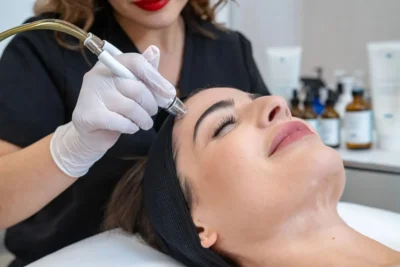
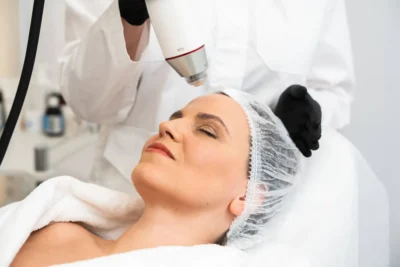
PDO Threads vs. RF Microneedling
RF microneedling uses controlled needles and radiofrequency energy to stimulate remodeling and can improve skin quality and mild laxity. It does not mechanically reposition tissue like a lifting thread.
RF microneedling may fit patients whose primary concern is texture or diffuse mild laxity. Threads may fit selected patients who want targeted repositioning. A staged combination is sometimes considered.
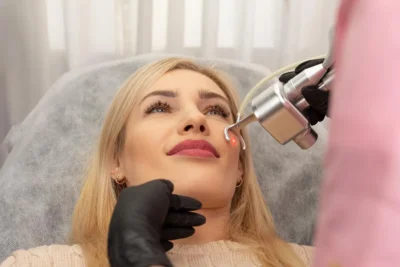
PDO Threads vs. Laser Resurfacing
Laser resurfacing improves the skin surface and stimulates remodeling. It can address wrinkles, texture, and sun damage, but it does not physically lift descended tissue in the same way as a thread.
A patient may need resurfacing, lifting, volume support, or more than one approach. Treating the correct layer is the key.
PDO Threads vs. Facelift
A facelift surgically repositions deeper tissues and removes or redrapes excess skin. It can create a more powerful and longer-lasting correction for moderate to advanced lower-face aging.
PDO threads involve smaller entry points and generally less recovery, but the result is more limited and temporary. Patients seeking a dramatic or durable correction should not be told that threads are equivalent to surgery.
Who Is a Good Candidate?
A potential candidate may have:
- Mild to moderate jowling
- Reasonably good skin quality
- Realistic expectations for subtle improvement
- Stable health
- Willingness to follow aftercare instructions
- A preference for less downtime than surgery
Threads may be less suitable with advanced laxity, very heavy tissue, certain autoimmune or bleeding concerns, active infection, unrealistic expectations, or anatomy that cannot be safely lifted with threads.
Why Provider Technique Matters
Thread lifting is highly technique-dependent. The provider must understand facial anatomy, vectors, depth, tissue mobility, entry points, and how different thread designs behave.
Poor planning can lead to asymmetry, visible or palpable threads, irregular contour, dimpling, infection, extrusion, or inadequate lift. A consultation should cover both common temporary effects and less common complications.
Frequently Asked Questions
Do PDO threads work for neck laxity?
They may improve selected mild neck laxity, but they do not remove substantial excess skin or fully correct pronounced neck bands.
What age is best for PDO threads?
There is no ideal age. Tissue quality and degree of laxity matter more than the number on a birth certificate.
Are thread-lift results immediate?
Some mechanical lift can be visible right away, but swelling and temporary irregularities can affect the early appearance. The result should be reassessed after healing.
Can PDO threads be combined with filler?
Sometimes. Filler may support structure while threads reposition tissue, but combination treatment should be conservative and anatomy-driven.
Can threads be removed?
Management depends on the thread type, timing, location, and complication. Anyone with a suspected problem should contact the treating medical provider rather than manipulating the area.
Are PDO threads permanent?
No. PDO is absorbable, and the cosmetic effect is temporary.
Who should not get PDO threads?
People with active infection, certain medical or healing conditions, advanced laxity, or unrealistic expectations may not be candidates. Eligibility requires medical review.
Schedule a PDO Thread Consultation in Glendale
The right lower-face plan starts by identifying whether the concern is skin, fat, volume, tissue descent, muscle, or bone support.
Schedule a consultation with Touch & Glow Med Spa in Glendale, Arizona to discuss PDO threads, filler, Radiesse, RF microneedling, laser resurfacing, and other options that may fit your anatomy and goals.
Results vary. Treatment recommendations require an individual consultation.

Wendy Beltran, FNP-BC, is the Medical Director and lead injector at Touch and Glow Med Spa in Glendale, Arizona. A Family Nurse Practitioner since 2008 with a clinical background in Gastroenterology, Family Practice, and Urgent Care, Wendy combines deep medical expertise with an artistic eye to deliver natural-looking results. She has been an aesthetic injector since 2018 and is passionate about patient education and safety.